
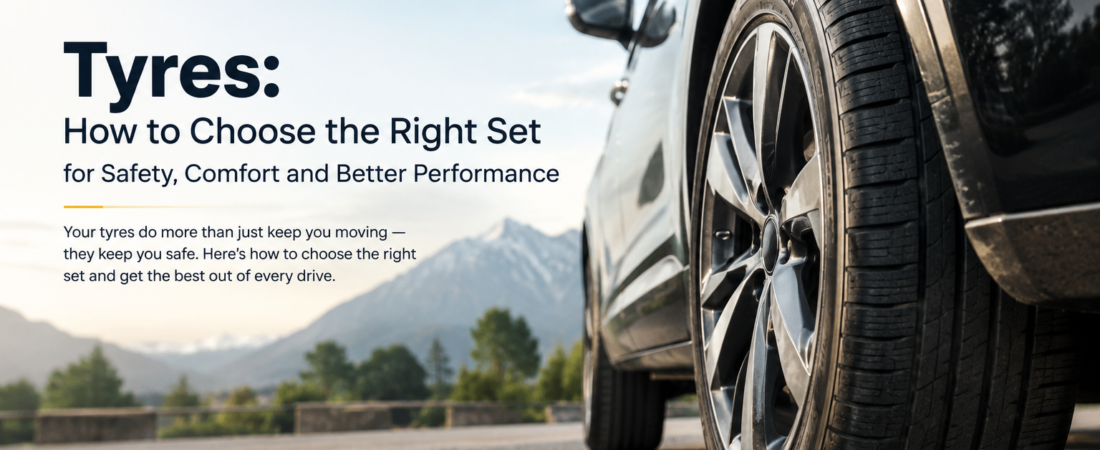
Tyres are one of the most important parts of any vehicle. They are the only part of your car that stays in direct contact with the road, so their condition and quality can affect grip, braking, handling, ride comfort, and fuel efficiency. Whether you drive every day in city traffic or regularly travel on highways, choosing the right tyres and maintaining them properly can make every journey more confident and comfortable.
With different sizes, tread patterns, brands, and tyre types available, it can be difficult to know which option is right for your vehicle. This guide explains what to consider when buying tyres, how to recognise wear, and which simple maintenance habits can help them last longer.
Why choosing the right tyres matters
The right tyres help your vehicle maintain traction when accelerating, turning, and braking. Tyres that suit your vehicle and driving conditions can also contribute to a smoother ride and more predictable handling. On the other hand, worn, incorrectly sized, or under-inflated tyres may affect stability and braking performance.
- Safety and grip: Adequate tread and the correct tyre type help maintain contact with the road.
- Driving comfort: Suitable tyres can help reduce road vibration and noise.
- Efficiency: Correct inflation and appropriate tyres can help reduce unnecessary rolling resistance.
- Long-term value: Regular checks and proper maintenance can help you get more useful life from your tyres.
How to choose the right tyres for your vehicle
1. Check the recommended tyre size
Start by checking the tyre size recommended by your vehicle manufacturer. You can usually find this information in the owner’s manual, on the driver-side door placard, or in another manufacturer-approved location. The size marking on a tyre includes information such as width, aspect ratio, construction type, and rim diameter. Do not choose a different size simply because it looks suitable; confirm compatibility with a qualified tyre professional.
2. Think about your usual driving conditions
Consider where and how you normally drive. City driving, frequent highway journeys, rough roads, and changing weather can place different demands on tyres. Look for tyres that match your vehicle, local conditions, and the type of driving you do most often. If you are unsure, ask a tyre specialist to explain the available options.
3. Compare tread design and performance needs
Tread patterns help channel water away from the contact area and influence traction, handling, and road noise. Different designs suit different vehicles and uses, so compare manufacturer specifications rather than judging a tyre by appearance alone. Make sure the tyres you select meet the requirements stated for your vehicle.
4. Compare quality, warranty, and overall value
Price matters, but it should not be the only deciding factor. Compare the tyre’s specifications, manufacturer warranty, availability, and suitability for your driving needs. A tyre that is compatible with your vehicle and properly maintained is a better choice than selecting an option based only on the lowest upfront price.
When should you replace your tyres?
Tyres do not all wear at the same rate. Driving habits, road surfaces, inflation pressure, alignment, load, and tyre age can all affect their condition. Check your tyres regularly for signs such as:
- Tread that has worn down to the manufacturer’s wear indicators or the applicable legal limit.
- Cracks, cuts, bulges, or other visible damage on the sidewall or tread.
- Repeated loss of air pressure.
- Uneven tread wear across the tyre.
- New vibration, pulling to one side, or unusual road noise.
If you notice damage, persistent pressure loss, or unusual handling, have the tyres inspected by a qualified professional. Do not ignore sidewall bulges or exposed cords; these can indicate a serious safety issue. Follow the vehicle and tyre manufacturers’ guidance on tyre age and replacement.
Simple tyre maintenance tips
A few regular checks can help you spot problems early and support tyre life:
- Check tyre pressure: Measure pressure when the tyres are cold and use the pressure recommended by your vehicle manufacturer—not the maximum pressure printed on the tyre sidewall.
- Inspect tread and sidewalls: Look for uneven wear, embedded objects, cuts, and bulges.
- Maintain wheel alignment: If the vehicle pulls to one side or the tyres wear unevenly, arrange an inspection.
- Rotate tyres when recommended: Follow the rotation schedule specified for your vehicle and tyre setup.
- Check before long journeys: Inspect tyre condition and pressure before setting off, especially when carrying extra passengers or luggage.
- Use a professional for repairs: Not every puncture can be safely repaired. Have the tyre assessed before continuing to use it.
Why buy tyres from a specialist?
A tyre specialist can help you confirm the correct size, compare suitable options, and understand the differences between available tyres. Professional advice is particularly useful if you are unsure about your vehicle’s specifications, notice uneven wear, or need help deciding between products for different driving conditions. Always confirm fitment and availability before making a purchase.
Find tyres and get expert guidance
If you are looking for tyres for your vehicle, visit Sky Tyre Emporium to explore the website and get in touch for guidance on choosing an option that suits your vehicle and driving needs. Check the details available on the website and confirm current product availability, specifications, and fitment before purchasing.
Frequently asked questions about tyres
How do I know which tyres fit my car?
Check the tyre size and specifications recommended by your vehicle manufacturer. If you are uncertain, ask a qualified tyre professional to confirm the correct fitment.
How often should I check tyre pressure?
Check tyre pressure regularly—ideally at least once a month and before long trips—and follow the schedule and pressure recommendations in your vehicle manual.
Can I keep driving with uneven tyre wear?
Uneven wear can point to incorrect pressure, alignment issues, suspension problems, or other causes. Arrange an inspection promptly rather than ignoring it.
Do more expensive tyres always perform better?
Not necessarily. The best choice depends on compatibility, performance requirements, driving conditions, warranty, and overall value—not price alone.
Final thoughts
Choosing the right tyres is about more than finding a product that fits the wheel. The correct size, suitable performance characteristics, regular pressure checks, and timely replacement all play a role in safer and more comfortable driving. Take time to compare your options, check manufacturer recommendations, and seek expert advice whenever you are unsure.
Further reading: trusted tyre safety resources
For more detailed guidance on tyre selection, inspections, and maintenance, these resources from established road-safety and tyre organisations may help:
- NHTSA TireWise: Tyre safety, buying and maintenance — guidance on tyre size, tread, ratings, and care.
- Michelin: What tyre pressure should you use? — how to find and maintain the pressure recommended for your vehicle.
- Michelin India: Car tyre FAQs — answers on tyre wear, pressure, and replacement.
- Bridgestone: How to inspect your tyres — checks for tread depth, pressure, damage, and age.
- NHTSA: Vehicle and tyre checks before a road trip — safety checks to consider before longer journeys.
These links are independent educational resources. Always follow your vehicle manufacturer’s recommendations and local regulations.